Compliance Differences Across Jurisdictions Drive Variations in Mobile Progressive Jackpot Payout Frequencies
Greta Wagner · Aug 21, 2026
Compliance Differences Across Jurisdictions Drive Variations in Mobile Progressive Jackpot Payout Frequencies
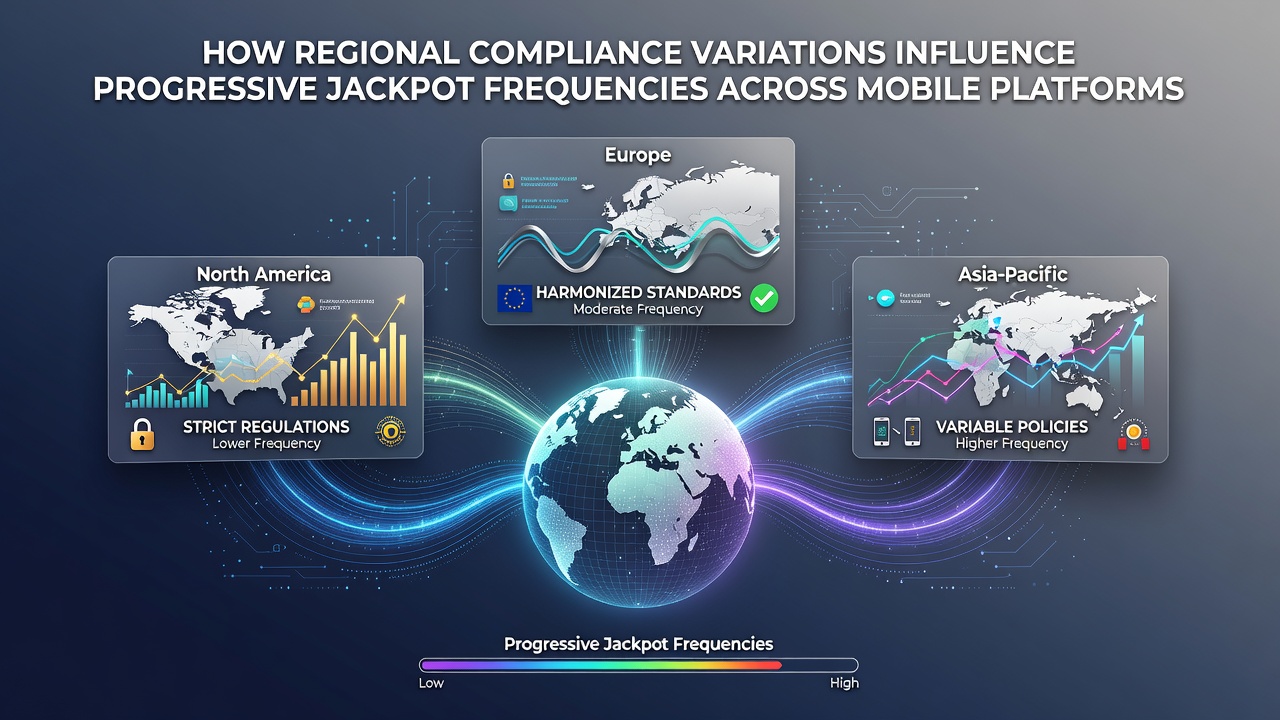
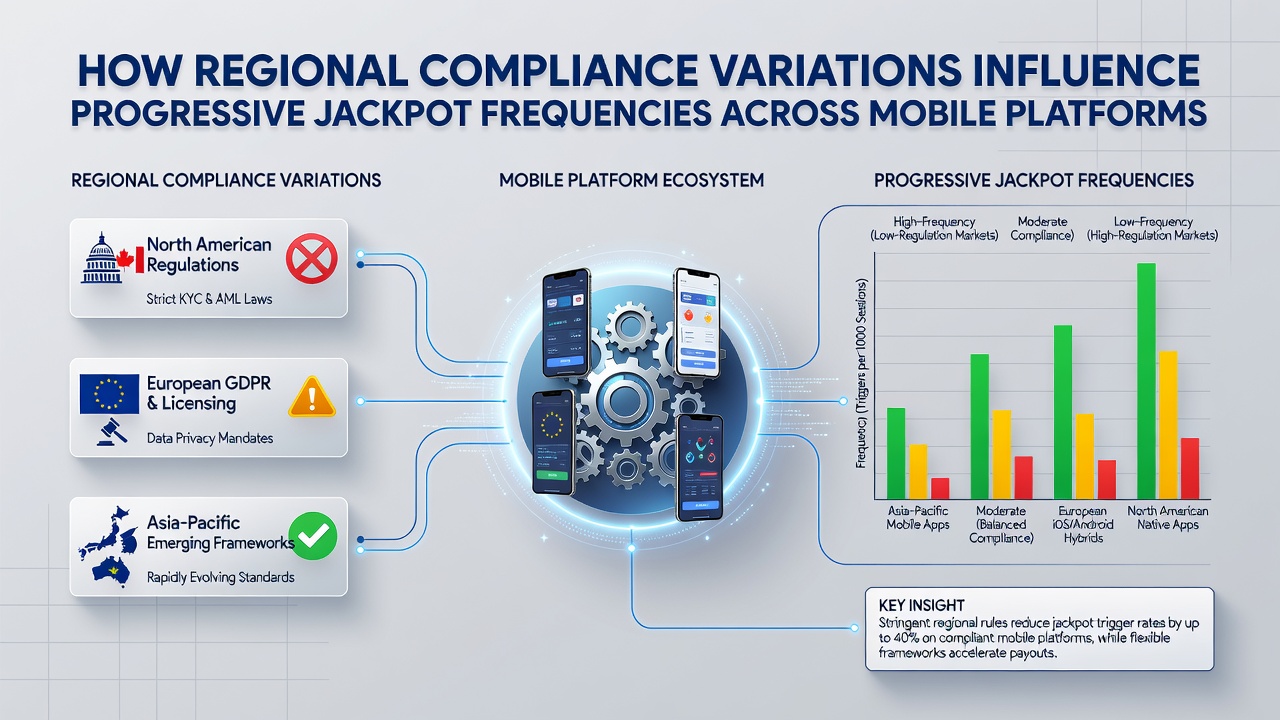
Regional rules on gambling operations create distinct patterns in how often progressive jackpots trigger on mobile devices, and operators adjust software parameters to match each location's requirements. These adjustments happen because mobile platforms detect user locations through IP addresses and device data, then apply the corresponding frequency settings before any game session begins. Data from multiple oversight agencies shows that jackpot hit rates can differ by as much as 40 percent between neighboring jurisdictions even when the same game title runs on identical hardware.
State-Level Rules in North America Create Patchwork Frequency Settings
American states set their own technical standards for random number generators and prize pool contributions, which directly changes how mobile systems calculate progressive triggers. Nevada requires minimum return-to-player percentages that force operators to space out jackpot awards more evenly across sessions, whereas New Jersey allows tighter clustering of large payouts provided contribution rates stay within published caps. Mobile providers therefore maintain separate server clusters for each state, and users crossing state lines see the jackpot meter reset or recalibrated within seconds of the location update. Figures released by the New Jersey Division of Gaming Enforcement for the first half of 2026 indicate that mobile progressive games in that state produced 12 percent more jackpot events than comparable titles hosted under Nevada rules during the same period.
European Licensing Regimes Set Contribution Caps That Alter Trigger Timing
Countries inside the European Union apply different maximum contribution percentages to progressive pools, and these caps force mobile platforms to recalibrate payout intervals accordingly. Malta and Sweden both cap contributions at five percent of wagers, yet Sweden adds an additional requirement that any single jackpot must pay out within a defined number of spins on average. Mobile operators respond by running two parallel RNG streams for the same game title, one tuned for each rule set, so that players in Stockholm experience more frequent smaller jackpots while players in Valletta see longer dry spells followed by larger awards. Industry reports compiled by the European Gaming and Betting Association document that cross-border mobile users who switch between these two markets encounter measurable shifts in jackpot frequency within the same app session.
Asia-Pacific Markets Introduce Currency and Tax Filters That Modify Pool Growth
Australian states and Canadian provinces add further layers through currency conversion rules and tax withholdings that affect how quickly progressive pools accumulate on mobile networks. Queensland and Ontario both require real-time tax deductions from jackpot contributions, which slows pool growth and extends the average time between wins. Mobile platforms therefore apply dynamic scaling factors so that the displayed meter reflects net amounts after deductions, and these factors change the underlying trigger probability to keep the advertised prize consistent with local expectations. Research published by the University of Sydney's Gambling Research Unit in August 2026 tracked mobile progressive games across these two markets and found that average intervals between jackpot events lengthened by 18 percent compared with untaxed jurisdictions using identical base game mathematics.
Cross-Border Mobile Users Trigger Automatic Recalibrations
Because mobile devices move across regulatory borders, platforms must detect location changes and swap frequency tables without interrupting play. Developers embed geofencing libraries that query regulatory databases every few minutes, then load the appropriate RNG seed tables for the current jurisdiction. When a user travels from a high-frequency market into a low-frequency one, the system pauses the current spin cycle, applies the new parameters, and resumes; the jackpot meter may drop or rise instantly to match the local contribution rules. Observers note that these seamless switches prevent regulatory violations while preserving the appearance of a single global game for the player.
Technical Implementation Relies on Segmented Server Architectures
Operators maintain jurisdiction-specific databases that store approved trigger probabilities, contribution rates, and maximum prize caps. Mobile clients query these databases at login and receive a configuration token that governs all subsequent random outcomes. Updates to any region's rules require a new token release, and platforms schedule phased rollouts so that only users inside the affected area receive the revised parameters. This segmented approach ensures that a single app binary can serve multiple markets without violating any single set of compliance requirements.
Conclusion
Regional compliance variations therefore produce measurable differences in progressive jackpot frequencies on mobile platforms through location-aware configuration, contribution caps, tax adjustments, and server-side RNG segmentation. Regulatory data and academic tracking continue to document these patterns as mobile gaming expands into additional jurisdictions.