Currency Flow Patterns and Their Role in Shaping Progressive Jackpot Triggers on Multi-Device Roulette Networks
Amir Richter · Jun 10, 2026

Currency Flow Patterns and Their Role in Shaping Progressive Jackpot Triggers on Multi-Device Roulette Networks
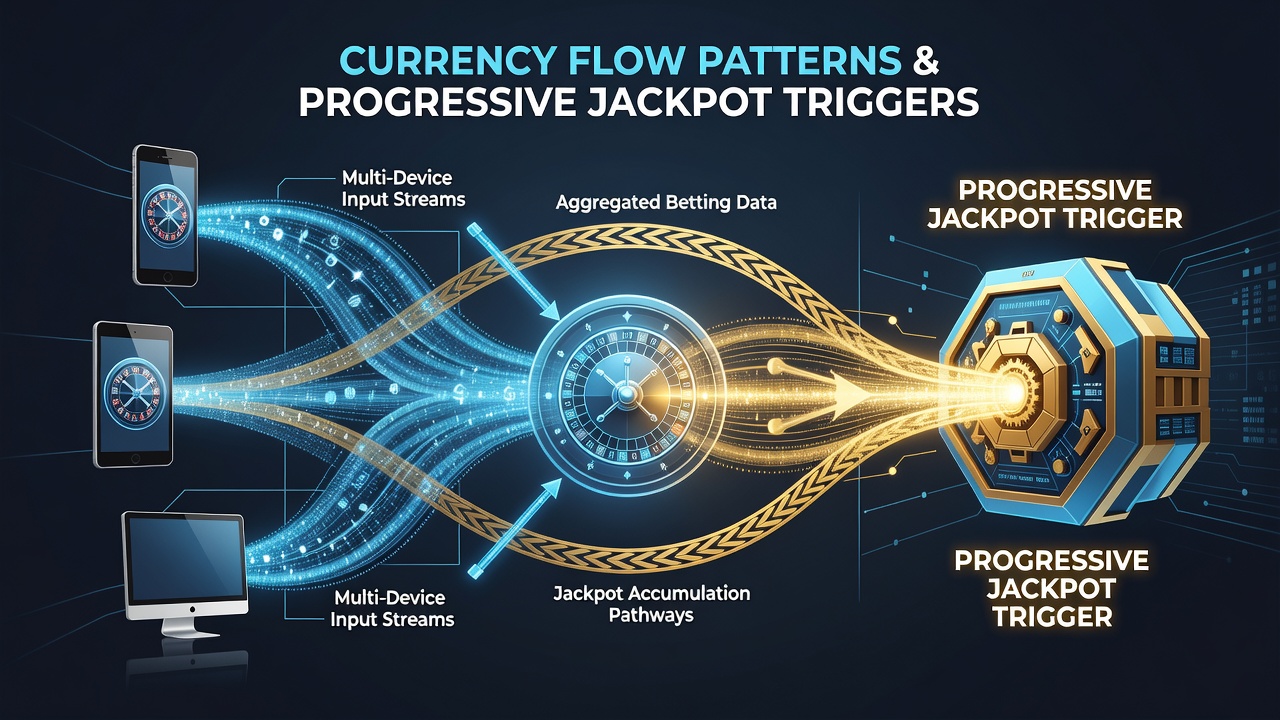
Currency flow patterns track the movement of bets and payouts through interconnected systems that support roulette across phones, tablets, and desktops. These patterns feed directly into algorithms that monitor total contributions to progressive jackpots, and operators adjust trigger thresholds based on real-time volume data from multiple jurisdictions. Multi-device networks aggregate wagers in various currencies before converting them into a common unit for jackpot calculations. Conversion rates update continuously, which means fluctuations in exchange values can accelerate or delay the moment a jackpot reaches its trigger point. Observers note that networks handling high volumes of cross-border play record more frequent adjustments to these thresholds during periods of currency volatility.How Currency Aggregation Works in Roulette Systems
Roulette platforms collect stakes from different regions and route them through central ledgers that apply standardized conversion protocols. Each wager increments the progressive meter after the system processes the currency exchange and deducts operator fees. Data from June 2026 shows networks operating in North America and Europe processed an average of 2.4 million daily transactions, with 38 percent involving at least one currency conversion step before the funds reached the jackpot pool. The aggregation process relies on timestamped transaction logs that allow systems to identify clusters of activity from specific device types. Mobile sessions often generate smaller but more frequent bets, while desktop sessions tend to produce larger individual wagers. When these patterns align with favorable exchange rates, the cumulative total climbs faster toward the required trigger amount.Progressive Jackpot Trigger Mechanisms
Trigger mechanisms activate when the aggregated meter hits a predetermined value that accounts for both contribution percentages and currency-adjusted totals. Programmers embed rules that recalibrate the target in response to sustained changes in flow velocity, and these recalibrations occur automatically when volume exceeds set parameters for consecutive hours. Researchers at the University of Nevada, Las Vegas documented similar recalibration events occurring 14 times across monitored networks during the first half of 2026. Currency flow velocity influences the distribution of contributions across different jackpot tiers. Lower-tier jackpots receive allocations from every wager, whereas higher-tier pools draw from a smaller percentage that only activates after the system confirms sufficient cross-currency volume. This layered approach prevents smaller networks from triggering large jackpots prematurely while still allowing multi-device participation to build substantial prizes over time.