How Blockchain Verification Timelines Shape Reward Distribution in Decentralized Live Dealer Networks Across Emerging Regulatory Zones
Ellis Long · Jun 3, 2026
How Blockchain Verification Timelines Shape Reward Distribution in Decentralized Live Dealer Networks Across Emerging Regulatory Zones
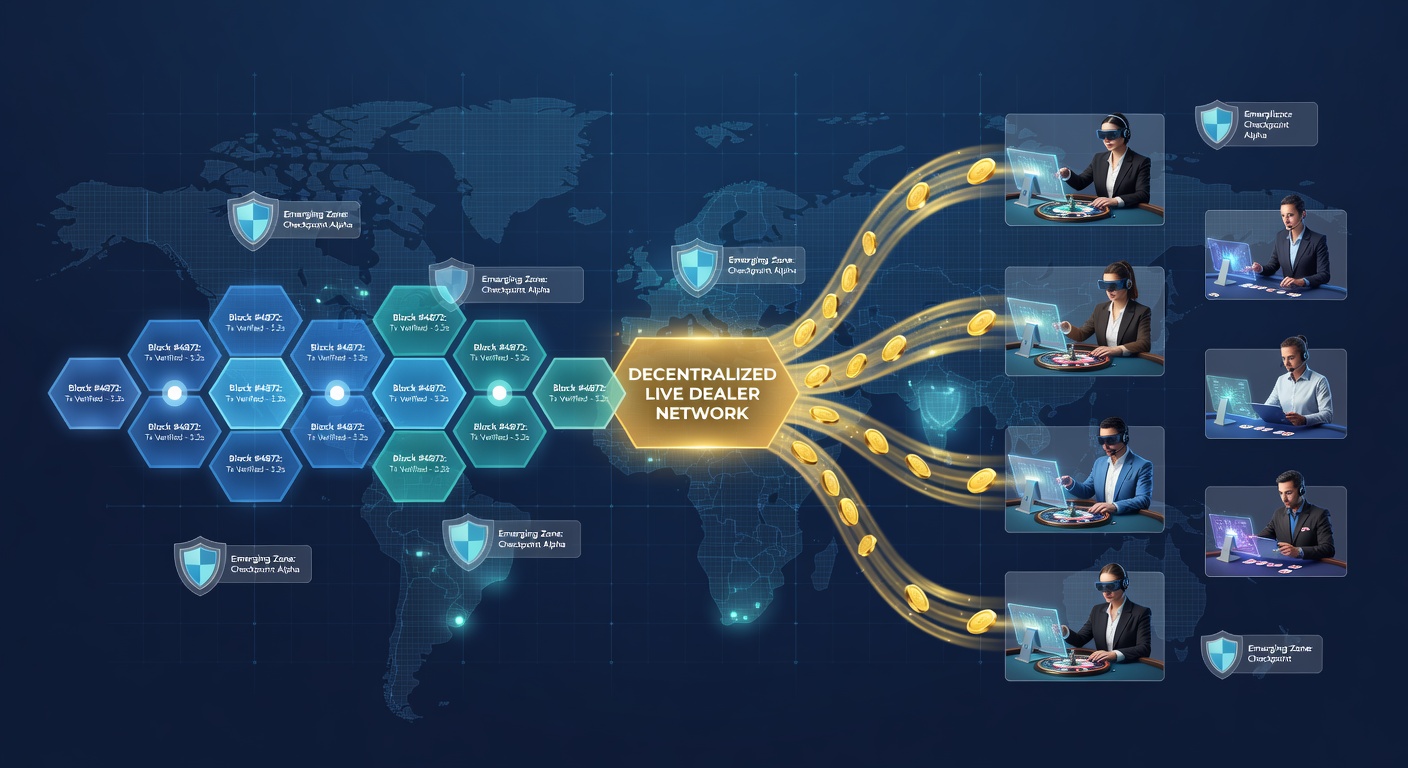
Blockchain verification timelines create measurable effects on reward distribution within decentralized live dealer networks operating in emerging regulatory zones, where transaction confirmation speeds directly determine when players receive payouts from table games streamed in real time. Systems built on proof-of-stake or delegated proof-of-stake protocols record each bet and outcome on distributed ledgers, yet the interval between block creation and finality often ranges from several seconds to multiple minutes depending on network congestion and consensus rules. Those intervals matter because reward smart contracts typically release funds only after a set number of confirmations, which means slower verification extends the period before credits appear in player wallets.
Verification Processes in Live Dealer Environments
Live dealer platforms that run on decentralized infrastructure combine video streams with on-chain settlement mechanisms, so every wager triggers a transaction that nodes must validate before the result feeds into automated payout functions. Observers note that networks using shorter block times, such as certain layer-two solutions, reduce average confirmation windows to under fifteen seconds in low-traffic periods, while main-chain operations can stretch beyond two minutes when validator participation drops or data throughput peaks. Research indicates that these differences influence player retention patterns because delayed rewards prompt some participants to pause further play until balances update.
Network participants who manage validator nodes in regions like parts of Southeast Asia and Latin America report that regulatory sandboxes introduced during the first half of 2026 require documented logging of verification delays exceeding thirty seconds. Such requirements stem from consumer-protection rules that aim to ensure transparency around fund-release timing rather than mandating specific technological choices.
Reward Distribution Mechanics and Timing Dependencies
Reward distribution occurs through smart contracts that monitor confirmation thresholds before executing token transfers, and those thresholds vary across protocols used by different decentralized operators. Data from platform analytics shows that contracts set at six confirmations on a network with twelve-second block intervals complete distributions in roughly seventy-two seconds under normal conditions, whereas the same number of confirmations on slower chains extends to several minutes. The added latency does not alter the mathematical fairness of game outcomes, yet it changes cash-flow timing for players who expect immediate credits after each hand or spin.
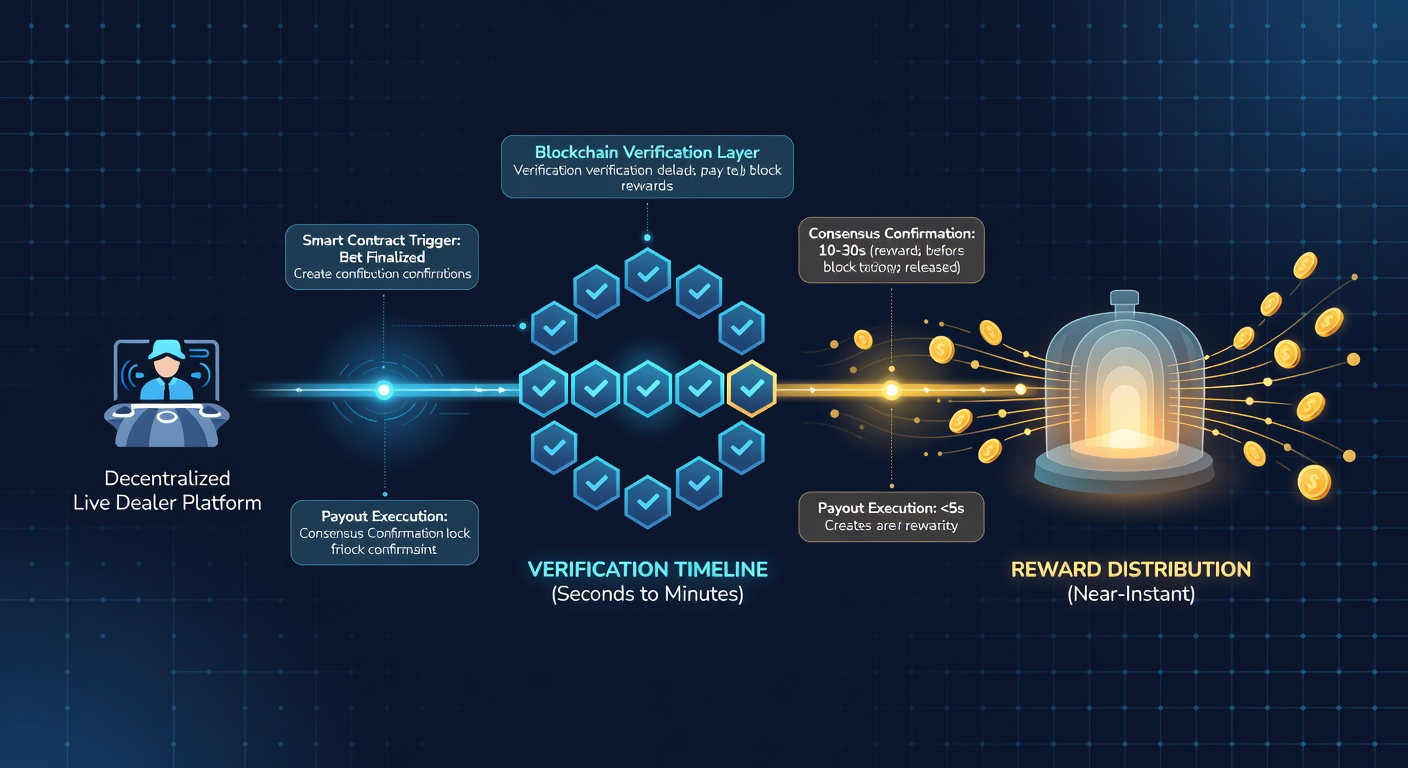
Operators in emerging zones have begun publishing average verification statistics alongside game rules so that participants can anticipate release windows. In jurisdictions where licensing frameworks took effect around June 2026, several networks adopted hybrid models that combine on-chain settlement for larger wins with off-chain pre-authorization for smaller amounts, then reconcile the two once final confirmation arrives. This approach keeps visible delays short while preserving the immutable record that regulators require for audit trails.
Regulatory Developments in Emerging Zones
Emerging regulatory zones across Latin America and parts of Africa have introduced licensing categories specifically for blockchain-based live dealer services, with rules that reference verification timelines as part of operational compliance. Figures released by regional gaming authorities reveal that operators must maintain logs showing median confirmation times and any instances where delays exceeded predefined thresholds. Compliance teams track these metrics because repeated exceedances can trigger review processes that affect license renewals.
One study conducted by researchers at a Canadian university examined transaction data from multiple decentralized platforms and found that networks employing adaptive gas-fee mechanisms experienced fewer prolonged verification periods during peak hours. Those findings prompted several operators in cross-border environments to integrate similar fee-adjustment tools, which in turn stabilized reward-release intervals for players located in newly regulated markets.
Technical Adjustments and Network-Level Responses
Developers working on decentralized live dealer protocols have responded to regulatory scrutiny by adjusting confirmation requirements based on transaction value, so that smaller routine payouts clear after fewer blocks while larger jackpots wait for additional finality. This tiered structure aligns reward timing with risk profiles and reduces overall load on validator sets during high-volume periods. Observers note that such adjustments also help networks meet reporting obligations tied to consumer protection standards that came into force earlier in 2026.
Industry reports from organizations such as the iGaming Ontario research portal document how similar tiered confirmation models performed across multiple jurisdictions, showing consistent reductions in average payout latency without compromising ledger integrity. Those performance patterns have informed pilot programs now underway in additional emerging markets.
Conclusion
Blockchain verification timelines intersect with reward distribution in decentralized live dealer networks by setting the practical speed at which smart contracts release funds after each game outcome. Emerging regulatory zones that formalized oversight in 2026 require operators to measure and disclose these timelines, leading platforms to adopt tiered confirmation rules and hybrid settlement methods that balance transparency with user experience. Data collected through mid-2026 indicates that networks capable of keeping median verification under one minute maintain steadier player activity across borders, while slower chains continue to refine consensus parameters to meet the same standards. Continued monitoring by regulatory bodies and academic researchers will determine how these technical and policy adjustments evolve in the coming periods.