Mapping Temporal Dynamics in Mobile Casino Engagement and Their Influence on Global Reward Frameworks
Greta Wagner · Aug 24, 2026
Mapping Temporal Dynamics in Mobile Casino Engagement and Their Influence on Global Reward Frameworks
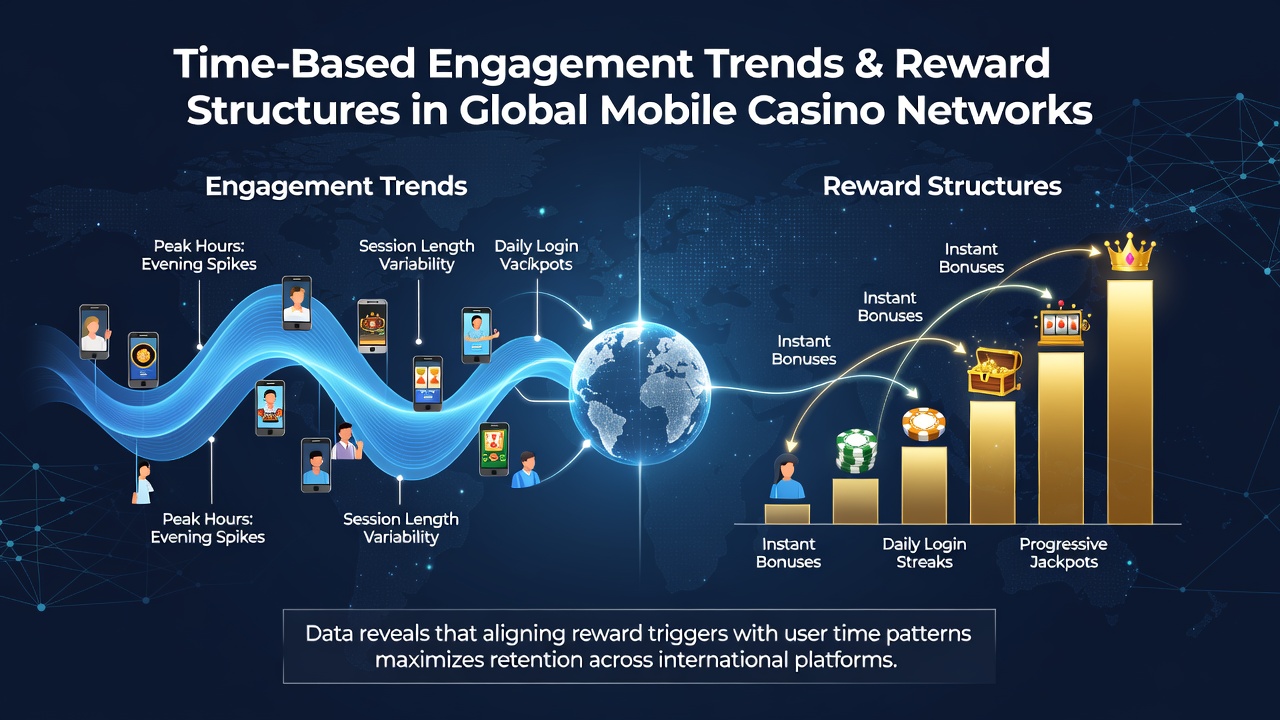
Global mobile casino networks have seen distinct shifts in user activity that align with specific hours of teh day and days of the week, and these patterns now drive how operators structure time-sensitive rewards in 2026. Data collected across multiple jurisdictions shows higher engagement during evening hours in North America and Europe, while Asia-Pacific markets record spikes during midday breaks adn late-night sessions. Operators adjust reward timing accordingly, releasing login bonuses and limited-time promotions that coincide with these observed peaks rather than applying uniform schedules across all regions.
Regional Variations in Activity Timing
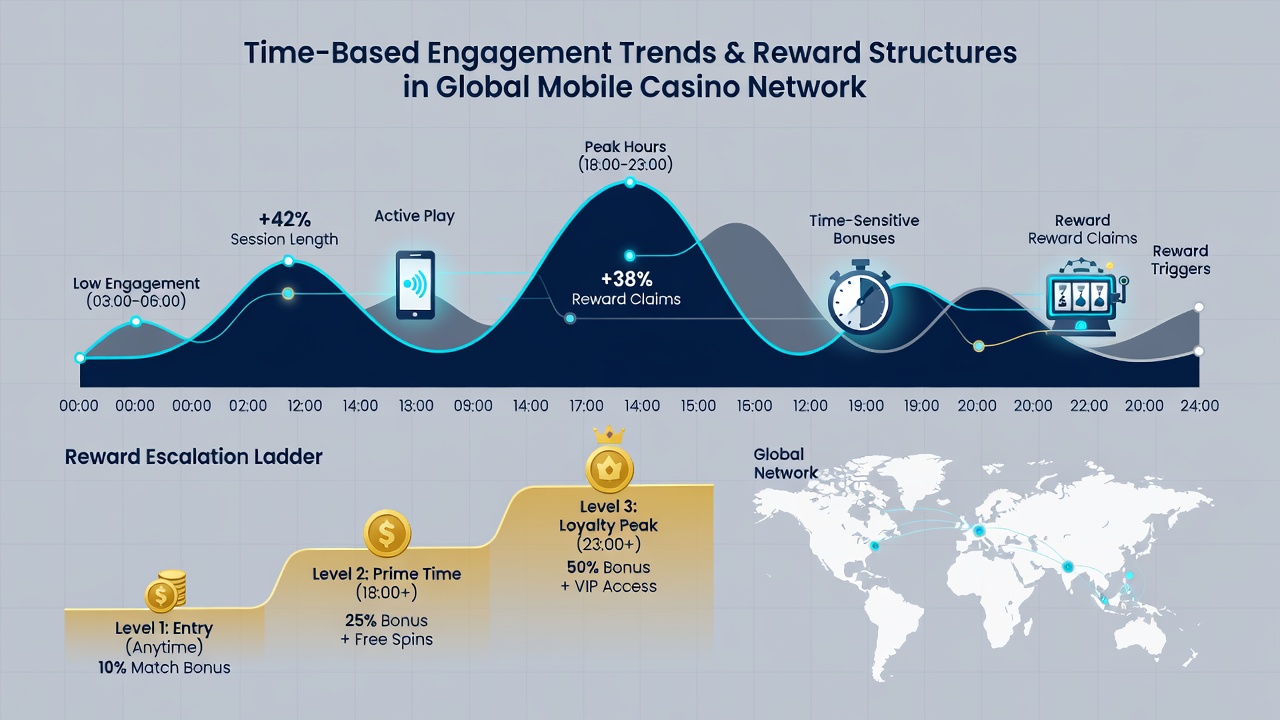
North American platforms report the strongest user concentration between 8 PM and midnight local time, with secondary surges on Friday and Saturday evenings. European networks display comparable evening peaks yet also register notable activity during weekday lunch hours in countries with established mobile gaming regulations. In Australia and parts of Southeast Asia, afternoon and early evening windows dominate, prompting operators to schedule flash rewards that expire within two to four hours of release. These differences emerge from device usage data aggregated by network providers and platform analytics firms, which track session starts and durations without storing personal identifiers.
August 2026 figures from several multi-jurisdictional operators indicate that time-limited rewards deployed during documented peak windows increased average session length by measurable margins compared with static reward schedules. Regulatory filings submitted to bodies such as the Nevada Gaming Control Board and the Australian Communications and Media Authority document these timing adjustments as standard practice for maintaining compliance while responding to engagement metrics.
Reward Structures Tied to Clock-Based Triggers
Operators deploy several categories of time-based incentives that directly reference clock time or elapsed intervals. Daily login streaks grant escalating multipliers when users return within a 24-hour window, while hourly prize drops activate only during predetermined blocks that rotate weekly. Weekend-specific multipliers appear in multiple markets, often limited to 48-hour periods that begin Friday evening. These structures rely on server-side timers that reset automatically, and they integrate with progressive jackpot pools whose trigger probabilities remain constant yet whose visibility increases during high-traffic intervals.
Cross-border platforms further refine these mechanics by accounting for time-zone offsets. A user in one region may receive a notification for a bonus that remains active only until the corresponding evening window closes in another jurisdiction. This approach allows single reward pools to serve dispersed audiences while preserving the scarcity element that encourages prompt participation. Industry reports compiled by the European Gaming and Betting Association highlight how such synchronized timing has become a common technical feature in mobile applications operating under multiple licenses.
Retention Metrics and Time-Sensitive Adjustments
Retention studies conducted by independent analytics providers reveal that users who claim at least one time-bound reward per week demonstrate longer intervals between account dormancy events. Platforms respond by varying the frequency and duration of these offers, shortening some bonuses to 30-minute windows during ultra-peak periods and extending others across entire weekends during slower months. The adjustments occur through automated systems that monitor real-time traffic and redistribute reward availability without manual intervention in most cases.
Research published in academic journals focused on digital behavior has examined how countdown timers displayed on mobile screens correlate with quicker decision-making among participants. While the studies do not attribute causation to any single design element, they document consistent patterns of increased interaction rates when visual timers accompany reward descriptions. Operators incorporate these observations into interface updates that maintain regulatory separation between promotional content and game mechanics.
Technical Implementation Across Networks
Backend systems powering global mobile casino networks use geolocation and device time settings to validate reward eligibility. Servers cross-reference user time zones against scheduled events to prevent duplicate claims or missed windows. This infrastructure supports simultaneous campaigns in dozens of markets, each with its own localized calendar of time-based promotions. Security protocols ensure that timer data cannot be altered client-side, preserving the integrity of the engagement model.
Network operators also track aggregate session data to identify emerging shifts, such as increased early-morning activity in certain urban markets following changes in remote work patterns. When such trends stabilize over several weeks, reward calendars receive corresponding updates. These iterative refinements keep time-based structures aligned with actual user behavior rather than fixed assumptions.
Conclusion
Time-based engagement trends continue to shape reward structures across global mobile casino networks through data-driven scheduling and regional calibration. Operators rely on observed activity patterns to determine when limited-time incentives activate, how long they remain available, and which user segments receive priority notifications. Regulatory submissions and industry analyses confirm that these practices operate within established compliance frameworks while responding to measurable shifts in participation timing. As mobile platforms expand into additional jurisdictions, the alignment between temporal user data and reward mechanics remains a central operational focus.