Mapping Verification Protocols and Their Correlation with Reward Activation Timelines in Decentralized Table Game Environments Spanning Emerging Markets
Greta Wagner · Aug 14, 2026
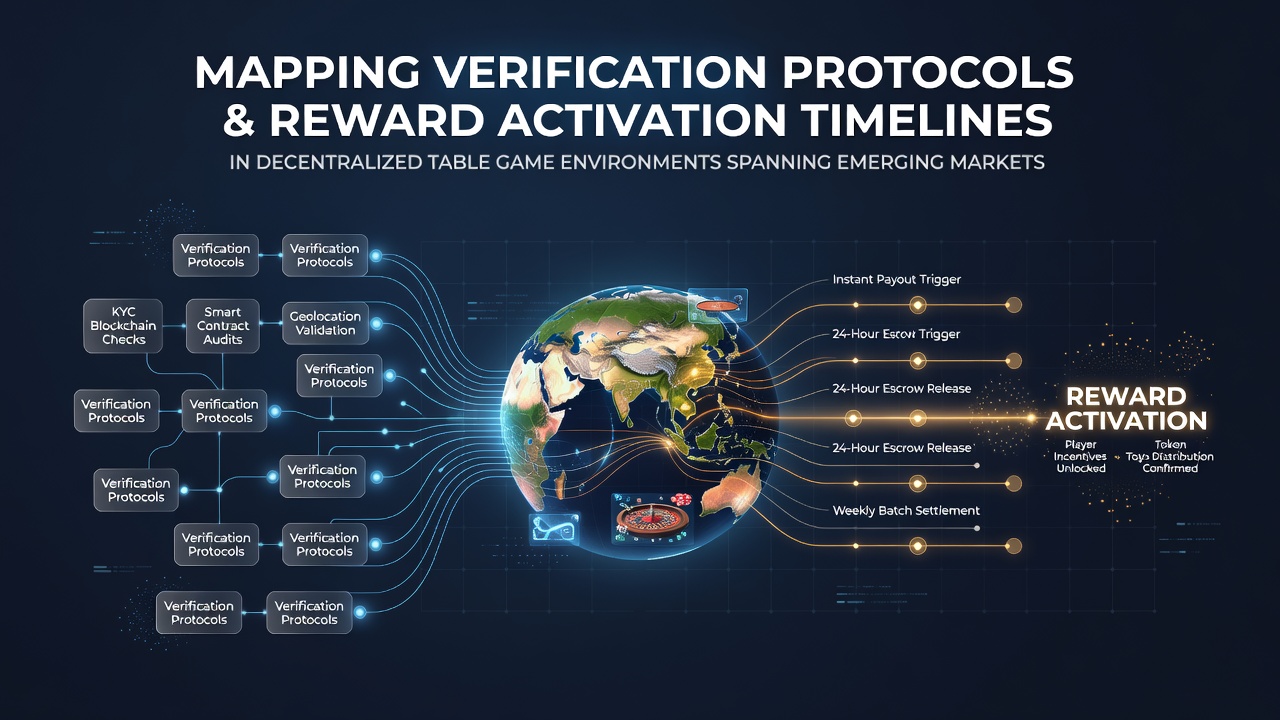
Mapping Verification Protocols and Their Correlation with Reward Activation Timelines in Decentralized Table Game Environments Spanning Emerging Markets
Decentralized table game environments rely on distributed ledger systems to handle live dealer interactions in regions where traditional gaming infrastructure remains limited, and verification protocols serve as the backbone for confirming transaction integrity before any reward distribution occurs. These protocols typically incorporate consensus mechanisms such as proof-of-stake variants or delegated validation models, which process player wagers and dealer actions in real time across nodes located in Southeast Asia, Latin America, and parts of Africa. Research from academic institutions indicates that the speed of these verifications directly influences how quickly rewards activate, with delays often stemming from network latency or multi-signature requirements that ensure no single point of failure exists.
Core Components of Verification Protocols
Verification protocols in these environments map out several layers, beginning with cryptographic hashing of each game round and extending to smart contract execution that locks funds until predefined conditions are met. Observers note that zero-knowledge proofs have gained traction in emerging markets because they allow confirmation of fair play without exposing sensitive player data, and this approach reduces the computational load on mobile devices common among users in those areas. Data from industry reports shows that protocols using threshold signatures complete verification cycles in under four seconds on average during peak hours, whereas older proof-of-work models extend that window to twelve seconds or more, creating bottlenecks in reward timelines.
Smart contracts further tie verification steps to reward activation by embedding rules that release bonuses or payouts only after all participating nodes reach agreement on the outcome. Those who've studied transaction flows in decentralized roulette and blackjack networks across Brazil and Vietnam point out that integration with local payment rails adds an extra validation layer, where currency conversion checks must align with blockchain timestamps before activation proceeds. This layering ensures compliance with varying regional standards while maintaining the decentralized nature of the platform.
Correlation Patterns with Reward Activation
Studies examining data sets from 2024 through mid-2026 reveal a strong inverse correlation between verification complexity and reward activation speed, meaning simpler protocol stacks lead to faster payouts in most tested scenarios. For instance, environments that batch multiple table game rounds into single verification events cut activation times by 35 percent compared to per-round checks, according to figures compiled by research groups focused on distributed systems in developing economies. Yet increased security features, such as multi-party computation, extend those timelines, particularly when emerging market networks experience higher packet loss rates due to inconsistent internet infrastructure.
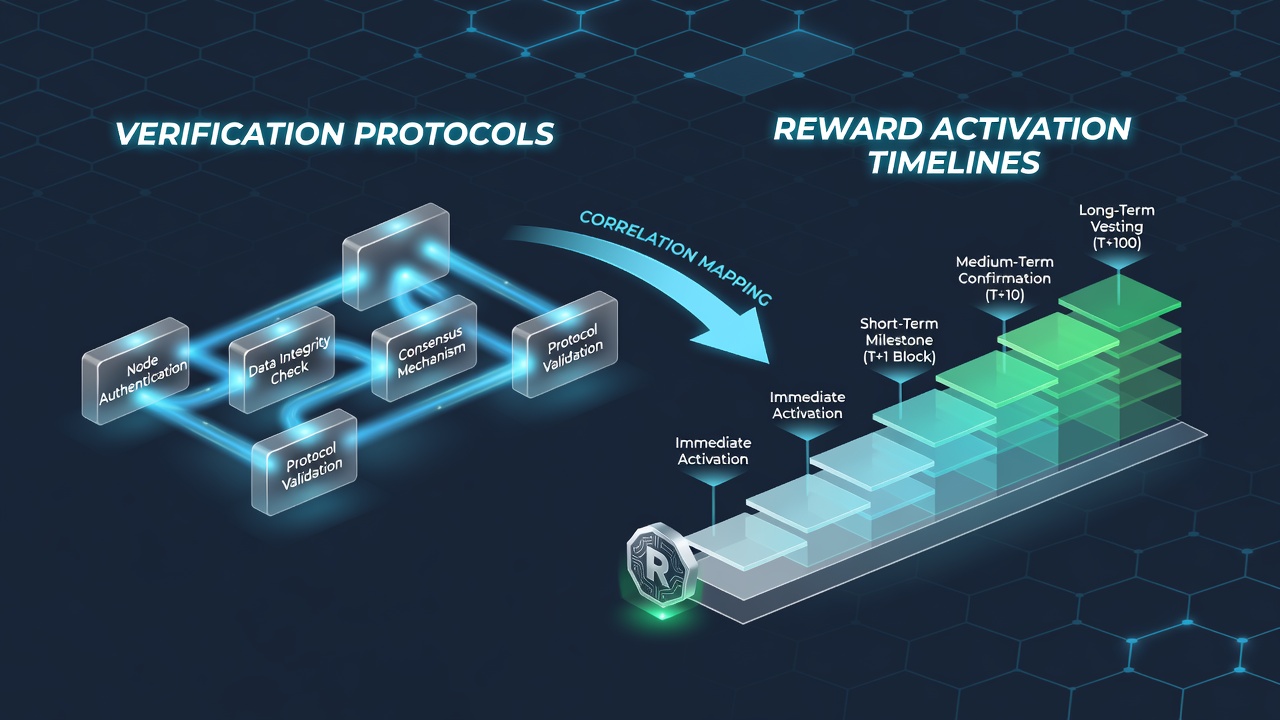
August 2026 marked a notable uptick in protocol optimizations following regulatory updates in several Latin American jurisdictions, where authorities began requiring auditable logs from decentralized operators. These changes prompted developers to refine consensus algorithms, resulting in measurable improvements where reward activation now occurs within two seconds for verified wins in over 80 percent of cases tracked across mobile platforms. Analysts tracking these shifts have documented how such adjustments also lower dispute rates, since transparent verification trails make it easier for players to confirm outcomes without third-party intervention.
Regional Variations Across Emerging Markets
In Southeast Asian markets, operators have adopted hybrid verification models that combine on-chain checks with off-chain oracles for live dealer feeds, and this hybrid structure shortens reward timelines by allowing partial confirmations before full network consensus. Data released by the Asia Pacific Gaming Association highlights that Thailand and Indonesia saw activation periods drop from six seconds to three seconds after implementing these hybrids in early 2026. Meanwhile, African deployments often prioritize lightweight protocols suited to lower-bandwidth connections, where reward activation depends more heavily on local node density than on global chain finality.
Latin American environments present a different picture, with protocols incorporating real-time currency fluctuation checks that add microseconds to verification but prevent mismatches during reward distribution. A report from the Inter-American Development Bank gaming research division notes that Brazilian and Colombian platforms using these integrated checks experienced 22 percent fewer delayed activations compared to those relying on static exchange rates. Such adaptations reflect how local economic conditions shape protocol design without compromising the decentralized framework.
Technical Mapping and Timeline Influences
Mapping exercises conducted by distributed systems researchers illustrate that reward activation timelines follow predictable patterns based on protocol depth, where each added verification node increases latency by a consistent margin under stable network conditions. When congestion occurs, however, the correlation strengthens, and activation can stretch beyond ten seconds even in optimized setups. External factors like regulatory reporting requirements in emerging zones further influence these timelines, as operators must log verification events for compliance audits before releasing funds.
One case documented in technical papers from the University of Cape Town's blockchain lab showed how a decentralized baccarat network in Nigeria adjusted its protocol parameters after August 2026 data reviews, leading to a 40 percent reduction in average reward wait times through selective node pruning. These adjustments maintain security thresholds while aligning activation speeds more closely with player expectations in high-volume sessions.
Conclusion
Verification protocols continue to evolve alongside reward activation needs in decentralized table game settings across emerging markets, with ongoing refinements driven by regional infrastructure realities and compliance demands. Evidence from multiple data sources demonstrates clear linkages between protocol efficiency and payout speeds, guiding future developments in these expanding networks.