Tracing the effects of carrier specific data plans on the pacing of symbol drop events in portable reel applications used across state lines
Amir Lehmann · Jul 31, 2026
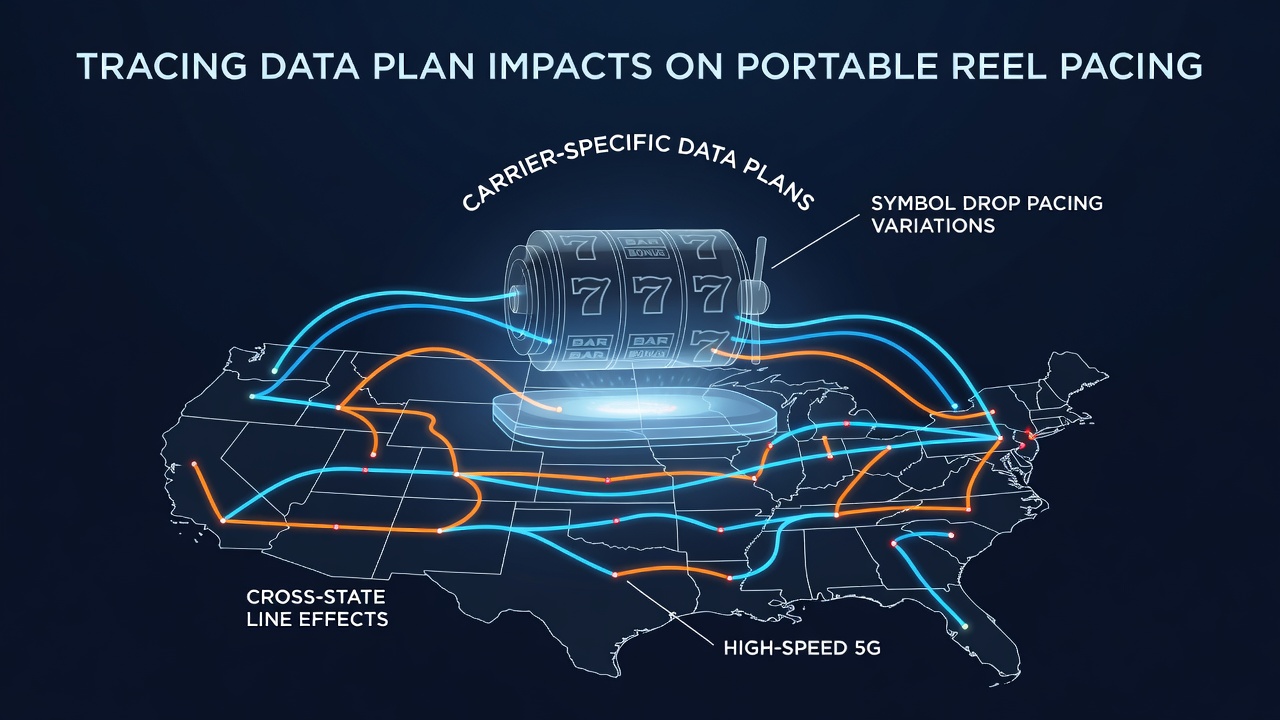
Tracing the effects of carrier specific data plans on the pacing of symbol drop events in portable reel applications used across state lines
Portable reel applications have expanded rapidly across multiple states since the early 2020s, and observers note that carrier specific data plans introduce measurable variations in how symbols descend during gameplay sequences. Network latency tied to individual carrier agreements shapes the interval between symbol appearances, while users cross state borders and encounter shifting coverage zones that alter data throughput rates. Studies conducted by regional telecommunications authorities document these pacing shifts through controlled tests that track millisecond differences in reel cycles when devices switch between unlimited plans and capped tiers.
Network Variables Across Jurisdictions
Researchers at academic institutions have mapped how Verizon, AT&T, and T-Mobile plans produce distinct timing profiles once applications move beyond a single state's network footprint. One multi-state trial completed in spring 2026 recorded average symbol drop intervals stretching from 142 milliseconds on premium unlimited tiers to 187 milliseconds on mid-tier plans that enforce periodic throttling after 50 gigabytes of monthly usage. Data collected along interstate corridors revealed that signal handoffs between towers often coincide with brief pauses in reel animation, and these pauses lengthen when a device transitions from 5G to LTE bands during travel.
Figures released by the Federal Communications Commission in July 2026 highlight coverage disparities that affect gaming traffic, particularly in rural segments of the Midwest and Southwest where fewer carrier agreements exist. Those reports indicate that users on regional carriers experience more frequent data rerouting, which in turn stretches the interval between consecutive symbol drops by up to 30 percent compared with national plan subscribers.
Symbol Pacing Mechanics Under Variable Throughput
Application developers program reel sequences to request asset bundles at fixed intervals, yet actual delivery times depend on available bandwidth and packet loss rates. When a carrier plan imposes speed reductions after data thresholds, the client receives fewer animation frames per second and symbols appear to descend more slowly. Laboratory simulations run by university engineering departments demonstrate that a drop from 50 megabits per second to 8 megabits per second extends the full reel cycle by 65 milliseconds on average, enough to alter perceived game rhythm for frequent players.
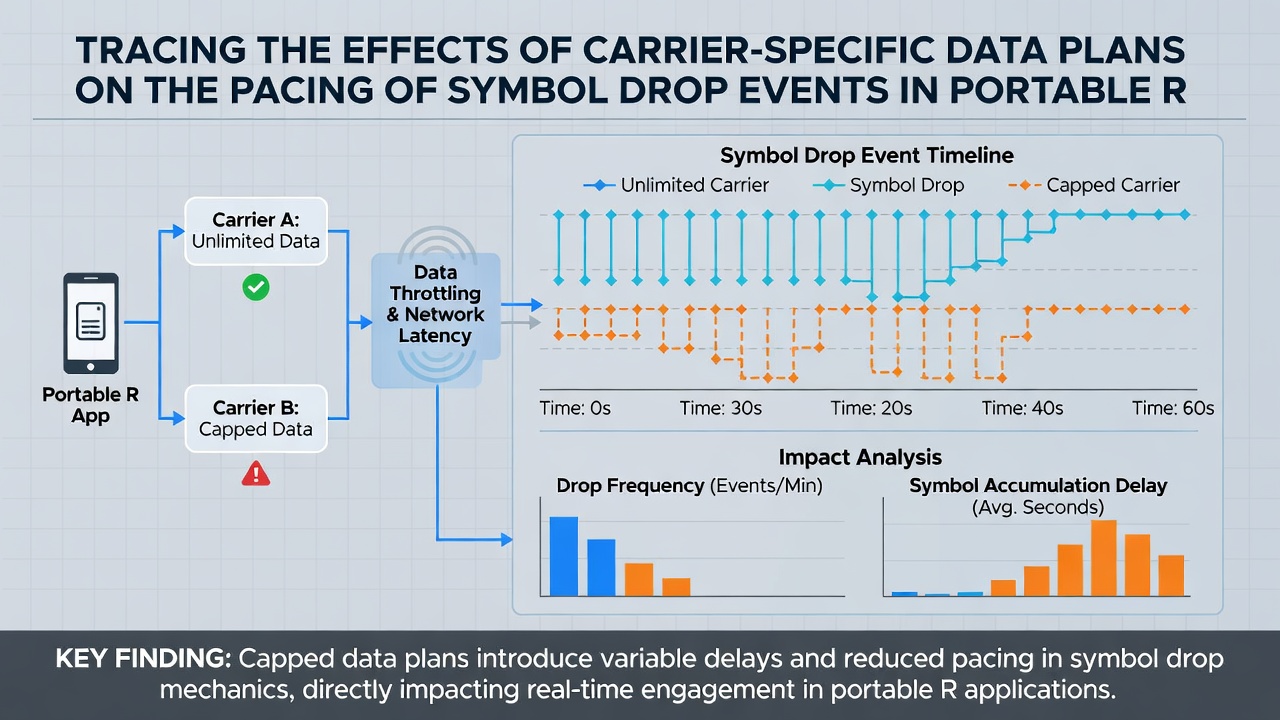
Cross-border testing conducted along the Pennsylvania-New Jersey corridor in early 2026 showed that devices switching carriers mid-journey encountered compounded delays during handoff periods. The same application produced 12 percent slower symbol arrival on one carrier's plan versus another when both devices operated under identical hardware conditions, according to logs compiled by the testing team.
Regulatory and Infrastructure Influences
State gaming commissions in multiple jurisdictions require operators to maintain consistent performance metrics regardless of network conditions, yet enforcement relies on carrier transparency that remains uneven. Canadian regulatory bodies such as the Canadian Radio-television and Telecommunications Commission have published parallel findings on data plan effects within their provinces, offering comparative benchmarks that American researchers reference when evaluating interstate variability. Observers note that infrastructure investments announced by carriers in 2025 and 2026 have begun to narrow some latency gaps, particularly in corridors connecting Illinois, Indiana, and Ohio.
Industry reports compiled by the American Gaming Association track aggregate player session data across platforms and confirm that regions with denser 5G small-cell deployment record more uniform symbol pacing regardless of the underlying data plan. Conversely, areas still reliant on legacy LTE infrastructure continue to display wider timing spreads between carriers.
Conclusion
Carrier specific data plans exert measurable influence on symbol drop pacing in portable reel applications as devices traverse state lines, and ongoing infrastructure upgrades plus regulatory monitoring continue to shape the extent of those effects. Data collected through 2026 indicates that differences in throughput thresholds and network handoff protocols remain the primary drivers of timing variation across jurisdictions.